


Build Visible Career Mobility
 Arvind RongalaCEO, Edstellar
Keeping high-impact IT talent engaged during shifting priorities starts with making career growth more predictable than project priorities. One leadership habit that has made a meaningful difference is treating skills development as part of the job rather than an optional benefit. At Edstellar, structured development paths tied to emerging capabilities—such as AI, cybersecurity, cloud, and data—help employees see how current work connects to future career opportunities. LinkedIn's 2025 Workplace Learning Report found that 91% of learning and development professionals believe learning is more important than ever, while 88% of organizations are concerned about employee retention. The strongest retention strategy is therefore not simply higher compensation; it is visible career mobility, regular skills conversations, and meaningful opportunities to apply newly acquired capabilities. When employees can see a credible path from today's role to tomorrow's opportunity, shifting business priorities become easier to navigate without making career progression feel uncertain.
Anchor Growth to Capabilities
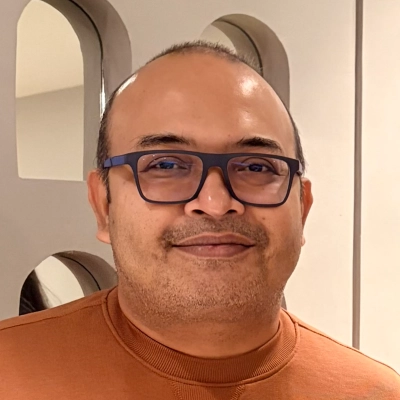 Raj BaruahCo Founder, VoiceAIWrapper
Growth must survive changing project priorities.
In a small software company, priorities can shift faster than a formal career plan. The risk is that high-impact technical people hear a series of urgent project changes but cannot see how their own capability is developing. Interesting work alone is not a career path if every project reset also resets the learning.
The leadership habit I use is to attach development to a capability, not to a single project. A team member might be growing in system design, incident judgment, customer discovery, automation quality, or technical leadership. When the roadmap changes, we look for the next real piece of work that exercises the same capability rather than abandoning the development goal.
Each capability needs evidence. We agree on a decision or responsibility the person should be able to own at the next level, the support they need, and what a credible example would look like. This is more concrete than telling someone to "be more strategic." It lets the employee and manager recognize progress even when the original initiative changes.
The practice becomes part of normal work through short decision debriefs. After a meaningful technical choice, the person explains the constraint, the alternative rejected, the risk accepted, and what they would inspect next time. The manager coaches the reasoning instead of only approving the output. That builds transferable judgment without adding a separate training program.
I also try to preserve ownership when priorities move. If a project is cancelled, the person should not lose every chance to show what they learned. They can document the decision, improve a reusable component, teach the lesson to the team, or take responsibility for a related problem. Closure is part of growth.
The tradeoff is that this approach cannot promise a perfectly linear promotion timeline. Budget and organizational needs still matter. It can promise clarity about which capability is growing, which evidence is missing, and what opportunity comes next.
The failure mode is retaining people with praise while keeping important decisions concentrated at the top. High-impact employees notice when they receive more tasks but not more authority. Skills growth becomes credible when a person can own a wider decision boundary and carry that judgment into the next priority, even when the roadmap keeps moving.
Assign Problems, Not Projects
 Runbo LiCEO, Magic Hour AI
I'm Runbo Li, co-founder and CEO of Magic Hour. The single biggest retention tool for high-impact technical people isn't a policy or a career ladder. It's ownership of outcome, not ownership of task.
Most companies get this backwards. They give their best people increasingly complex assignments, then wonder why they leave. A senior engineer doesn't want a harder ticket. They want to see their fingerprints on something that moved the needle, and they want the autonomy to decide how.
Here's what made this real for us. David and I run Magic Hour as a two-person team serving millions of users. That's only possible because with every system we build and every workflow we design, we ask: "Who owns the outcome here?" Not who's responsible for shipping the feature, but who owns the metric, the user experience, the business result. When you frame work that way, the person doing it is no longer an executor. They're a decision-maker. And decision-makers don't leave because they got a 15% bump somewhere else.
The one habit that made the clearest difference: I stopped assigning projects and started assigning problems. When I was at Meta working on zero-to-one products at NPE, the teams that retained their best people were the ones where an engineer could say, "I chose this approach, I tested it, I was wrong, I iterated, and here's what worked." The teams that bled talent were the ones where a PM handed down specs and engineers were just translating requirements into code.
Shifting budgets and priorities actually help retention if you handle them right. Every priority shift is a chance to say to your best person: "The landscape changed. What do you think we should do?" That question is worth more than any promotion cycle. It signals trust, it builds judgment, and it makes someone feel like a co-founder of their domain rather than a cog.
Stop managing careers. Start sharing problems. The people worth keeping don't want a ladder. They want a laboratory.
Invite IT Leaders Into Decisions
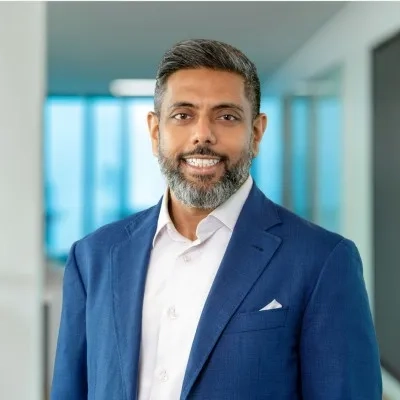
Shifting priorities represent excellent learning opportunities. Top IT employees are people who love learning new platforms and tools. If we can tie those tools directly to our objectives and pain points, IT leaders can become drivers of change rather than the people who have to clean up the mess after changes are made. This starts with getting them in the room when key decisions are made.
Close Paused Work Properly
 Sarah GrayHR Director, Cintra
Unfinished work is what wears skilled IT people down, and shifting priorities produce a great deal of it. Each reprioritisation leaves something half built that nobody will see, and for a capable engineer that is worse than a heavy workload. The leadership habit that made a difference was treating a stopped piece of work as something that gets closed properly: a short written note on what was built, what was learned and what it would take to restart, shared with the people who did it. It sounds bureaucratic. In practice, it is the difference between work that was abandoned and work that was finished for now.
The second thing is giving each high-impact person one thread that does not move when the budget does. A capability they own, or a problem they are known for, that survives the quarter's reshuffle. People tolerate a lot of change around them if one part of their working life is theirs to build over time.
Include Juniors in Technical Discussions
 Evgeny LeonovChief Technology Officer, Ronas IT | Software Development Company
We keep high-impact engineers engaged by making growth work visible and by letting juniors into real technical conversations earlier. At Ronas IT, mentoring and onboarding are planned as internal work instead of being left to whoever has spare energy after delivery. During budget shifts, invisible work is the first work to disappear.
The leadership habit that made the clearest difference was inviting juniors into planning, priority discussions, and joint team calls. Sometimes they're mostly listening. That still gives them access to tradeoffs, estimation concerns, and the reasons a senior engineer accepts one path and rejects another. The habit gives junior engineers context before they own a decision themselves.
The change showed up in the team dynamic. Juniors began contributing more ideas on joint team calls, and that let the team look at some things from a different angle.
We also use the developer experience survey as an operating input. The company looks at the lowest-scored themes by respondent group, asks part of the team what sits behind those scores, turns improvement ideas into tracker comments, and lets team likes guide what to tackle first.
Rotate Roles to Sustain Growth
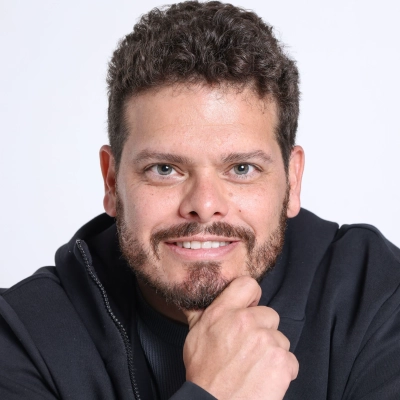 Joe PhillipsFounder, Master Joe Phillips
Budgets change. Priorities change. Retention becomes a problem when the role does not change with them.
I have managed two software companies through many changes: Trifecta Software since 2011 and Spearhead Technologies since 2016. The engineers who stayed with us the longest were not always the best paid. They were the ones whose responsibilities evolved with the company, instead of simply receiving more work.
One practice has made a real difference for us: rotating senior developers between client projects and our internal products on a fixed schedule. In this way, their professional growth does not depend on which client contract is active during a particular quarter.
This practice also requires us to maintain a written role contract, not only a job title, and review it at least once every year.
Another important point is how performance is measured. We evaluate people by outcomes, quality, risk, and cost—not by hours logged or the number of tickets closed. In my experience, this change reduced disengagement more effectively than salary increases alone.